
Fulfilling the IoT Promise—In the Cloud and at the Edge
The possibilities presented by the IoT are seemingly endless, but these devices don’t work on their own—they rely on cloud and edge computing to help transform the world they inhabit
By Andrew Wig
The march of technology is a series of dependencies, each advancement made possible by the last. Such is the relationship between cloud computing, which has grown to become a cornerstone of IT, and the still-emerging-yet-omnipresent internet of things (IoT).
IoT refers to the kinds of devices that communicate with one another and the cloud for purposes such as automation, analysis and monitoring. While there are examples of cloudless IoT, the cloud is generally what enables this class of devices and their dizzying array of use cases. Established and emerging uses of IoT range from “smart” devices commonly found in homes, to sensors optimizing manufacturing processes, to augmented reality (AR) glasses assisting repair technicians—just for starters.
“Let's put it this way: We have just scratched the surface,” says IBM’s Utpal Mangla, vice president of distributed, sovereign cloud and ecosystem partnerships at IBM. “ … There's going to be plethora of use cases, and a lot of them will have potential to disrupt existing industries.”
Established and Emerging Uses of IoT: Scratching the Surface
Sensors and cameras to optimize manufacturing processes and detect defects

Equipment Repair:
⟶
Augmented reality (AR) glasses with heads-up displays guiding technicians through repairs
Predictive Maintenance:
⟶
Sensors monitoring manufacturing equipment to determine necessary spare parts
Logistics:
⟶
Sensors tracking shipments, their contents and in-store stocking status

System Simulation:
⟶
Sensors embedded in physical systems can transmit data to create a “digital twin” for monitoring, analysis and optimization
IoT can play a large role in logistics and inventory management, with sensors positioned along the supply chain to provide information such as the whereabouts of shipments, the content of those shipments and even in-store stocking status. IoT may also be in place where those products are made, whether in the form of cameras for quality control or robots used in manufacturing.
IoT implementations can also monitor manufacturing equipment to help managers know what spare parts they should have on hand. “I'm really impressed with the predictive maintenance sphere in manufacturing,” says Andy Striha, senior project manager at ScienceSoft. Among the software development company’s IoT projects are a remote physiotherapy platform and a solution for real-time energy consumption monitoring.
The list of potential IoT use cases goes on and on, supported by two main types of processing infrastructure. This is where cloud’s cousin, edge computing, comes into play.

Unlock the full potential of your IBM Power environment with BLAIR’s comprehensive managed services. From installation and configuration to continuous monitoring and proactive support, our team ensures your critical workloads run smoothly and securely. Benefit from optimized performance, enhanced reliability and expert guidance tailored to your business needs. Focus on innovation while we handle the complexity of your IBM Power infrastructure. Discover how BLAIR can elevate your IT operations today.
Installation & Setup
Our certified experts handle the entire IBM Power environment setup— from hardware configuration to software deployment. We ensure a secure, stable and optimized infrastructure tailored to your workloads. With zero downtime, minimal disruption and full compatibility, your transition is seamless and worry-free from day one.
Proactive Monitoring & Maintenance
Enjoy peace of mind with continuous, 24/7/365 monitoring and predictive maintenance. Our proactive approach detects anomalies before they cause disruptions. With built-in redundancies and intelligent alerts, we maximize uptime, protect business continuity and let you focus on growth—not troubleshooting.
Security & Compliance
Blair delivers enterprise-grade security for your IBM Power infrastructure. We implement advanced encryption, strict access controls and regular audits to maintain compliance with key standards like ISO, SOC 2 and HIPAA. Our tailored protection evolves with threats—so your data stays secure and your operations stay compliant.
Performance Optimization & Support

As companies and businesses are building their use cases, they're constantly keeping edge in mind, because edge is the way for future use case generation.

—Utpal Mangla, vice president, distributed, sovereign cloud and ecosystem partnerships, IBM
Cloud vs. Edge
Often too small to contain their own processors, IoT devices typically rely on compute that resides elsewhere. “Cloud and edge are the two standard architectures that get that data and act on it,” explains Chris McReynolds, Kyndryl’s global head of offerings for network and edge.
By contrast to the distributed data processing that characterizes the cloud, edge computing locates that processing physically closer to the IoT devices collecting the data. For tasks requiring low latency, that shorter distance is critical.
For instance, in a factory setting, a camera monitoring computer chips for defects might require speedy data transfer for real-time, AI-based decision making, McReynolds explains. The cloud, on the other hand, is best suited for IoT deployments that have either more complex compute requirements or less time sensitivity.
While Mangla envisions cloud continuing to play an integral role in IoT, especially for data storage, he anticipates edge adoption becoming increasingly prevalent as new IoT use cases emerge. Driven by demand for low latency and the requirements of Generative AI, over half of the world’s data will be processed at the edge by 2031, according to a projection from ReThink Technology Research.
“As companies and businesses are building their use cases, they're constantly keeping edge in mind, because edge is the way for future use case generation,” Mangla says. For instance, a select few clothing retailers are equipped with “AR mirrors” that let shoppers see how they look wearing different items without physically trying them on, quickly changing between different colors and styles. “All of that can happen on the edge,” Mangla says.
Types of Edge Deployments
Edge computing comes in various forms. In use cases where time is of the essence, it is most common for the data to be processed under the same roof as the IoT devices (though apart from the enterprise’s core data center), McReynolds notes.
Edge computing can also refer to data centers located in the same geographic area as the data source but not next to it, an arrangement known as “local near edge.” One example may be a data center that accommodates several retail stores located nearby, McReynolds explains.
In addition to IoT business cases (or as part of them), AI is driving demand for edge data centers. Evidence of this includes the recently announced collaboration between IBM and Lumen to pair the former’s portfolio of watsonx AI products with the latter’s Edge Cloud infrastructure.
Lumen operates 60 edge data centers strategically located near customer operations, notes Adam Lawrence, general manager for IBM Americas. “Historically, most AI inferencing has happened in the cloud, but we're seeing a growing shift towards AI inferencing at the edge,” Lawrence says. Edge data centers can achieve a latency of under 5ms, while public cloud latency typically ranges from 30-100ms, he adds.
“In short, edge is fast and local; cloud is powerful and scalable,” Lawrence says.
Where Is the Edge?
↓ Hover/Tap
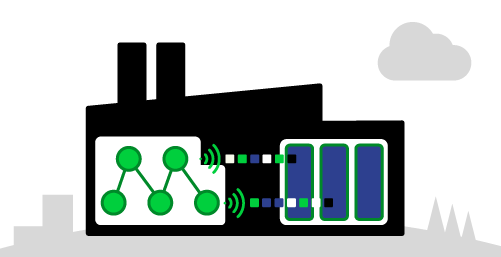
On-Prem Edge:
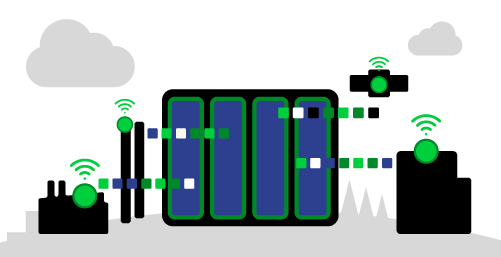
Data processing occurs in the same facility where the data is generated.
Local Near Edge:
Data centers are located in the same geographic area as the data source.
Security and Data Sovereignty
On top of data transfer needs, compute requirements and resource considerations, organizations exploring IoT deployments must (as always) weigh security. This can make for a big mental hurdle, McReynolds notes, especially in tightly controlled manufacturing settings, where plant managers may balk at the idea of letting their data leave the premises.
“There has to be a comfort level of these plant managers before you can really do the edge computing and the AI models and all the neat stuff to help them make their plant more productive,” McReynolds says.
Cloud Migration With Peace of Mind
For those who may be hesitant to put their data and applications in the cloud, here are seven tips for successful cloud migration, from Greg Tevis, vice president of strategy for Cobalt Iron, a provider of cloud-based backup solutions:

Think first, migrate later (and get help where you need it)
“Make sure you're testing small pieces before you make that jump,” says Tevis. But first, assess whether you need help. For example, “IBM i is a very unique infrastructure ecosystem,” Tevis says. “And so they have their expertise in their environment, but sometimes they might need additional assistance in terms of cloud technologies.”

Right-size and monitor your resources
The dynamic provisioning enabled by cloud allows you to take advantage of resource optimization opportunities. Actively monitor the use of those resources to identify opportunities to trim back CPU or capacity.

Ensure proper planning for performance, capacity and pricing
“Sometimes people jump to the cloud and they have a 50 terabyte database that they did special things on-prem for, and then in the cloud it's like, ‘Oh, how are we going to do this?’” Tevis says.
Continue your data protection governance
Migrating to the cloud does not mean you are no longer responsible for your data. “All of that still is maintained by the company, that responsibility for their data, their data protection, their data discipline, their data stewardship,” Tevis says.

Beware of “shadow IT”
With cloud expanding access to software resources within your company, there is a risk of groups within your organization purchasing more than they need. These business processes can tend to become relaxed in cloud-first environments, Tevis says.

Consider long-term costs
“While initial investments often are not as high for cloud resources versus buying your own, over time, they become more expensive,” Tevis says. He has observed that investing in your own on-prem infrastructure typically becomes cheaper than cloud after about 18 months for compute and 22 months for storage.

If you feel anxious, good
“I love to hear customers having anxiety and asking questions and expressing concerns about migrating to the cloud, because if they're not, then they're probably not thinking through all the different applications, data operations and things to be concerned about,” Tevis says.
On top of standard security protocols, special attention must be given to IoT devices positioned outside of controlled environments, Mangla notes.
That’s just one location-related factor for data collection and security; another is data sovereignty. Because of the massive amount of data they collect, IoT devices can introduce complexity to the task of meeting data regulation requirements. In this respect, keeping data local and avoiding complications that arise when it crosses international borders is one point of advantage for edge. "Sometimes, edge is not about latency and not about cost and performance; it's more just regulatory,” McReynolds says.
Mangla notes that other factors to contemplate include: “How are you going to do AI adoption through it? How have you created your hybrid cloud infrastructure? At what points in time are you going to pass the data back to the cloud, etc. And then, obviously, security.”
