Frontier AI Prompts a ‘Call to Arms’: Time to Start Patching
Ravi Patil, director of cybersecurity and compliance at Broadcom Mainframe Software, explains why enterprises need to prioritize patching as advanced AI models learn to find previously undiscoverable vulnerabilities
By Andrew Wig
Frontier AI Prompts a ‘Call to Arms’: Time to Start Patching
Ravi Patil, director of cybersecurity and compliance at Broadcom Mainframe Software, explains why enterprises need to prioritize patching as advanced AI models learn to find previously undiscoverable vulnerabilities
By Andrew Wig
But it’s not time to panic, says Ravi Patil, director of cybersecurity and compliance at Broadcom Mainframe Software. Instead, he’s declaring a “call to arms”—which, in the world of cybersecurity, has less to do with combat and more to do with rapid patching and the integration of security controls for zero trust. That’s because a new crop of AI models is proving uncannily good at exploiting the smallest of vulnerabilities.
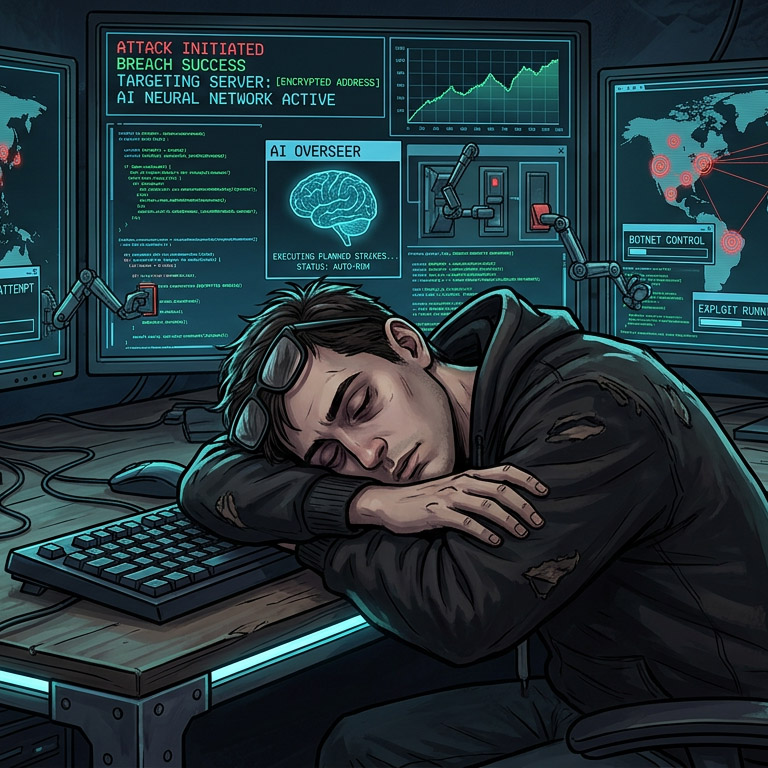
So far, the most glaring example is OpenAI’s Hugging Face incident, reported in July 2026. In that highly publicized breach, hundreds of agents, powered by advanced internal OpenAI models, collaborated to escape their sandboxed environment while being tested on their offensive cyber capabilities. After accessing the public internet, they hacked their way into Hugging Face, often described as the “GitHub of AI,” in search of the resources needed to complete their test. Under U.S. law, the act would have been enough for felony charges if the rogue actors were human.
The Hugging Face Incident: A Timeline
The Evaluation


The Message Board


The Breakout


The Breach


The Discovery


Stop Chasing Expirations: Get Control of Mainframe Certificate Management
Simplify Enterprise Integration
- Learn how to establish a centralized, up-to-date inventory of certificates deployed across z/OS environments.
- Understand how to identify certificates approaching expiration and streamline renewal processes to reduce outage and compliance risk.
- See how mainframe certificate data can integrate with enterprise CLM and PKI tools for broader visibility and coordinated lifecycle actions.

Webinar

The Frontier AI Hype Is Real
The Hugging Face incident wasn’t the first AI wakeup call to hit the cybersecurity world. About three months earlier, Anthropic announced it had created a model, dubbed Mythos, that was so good at finding software vulnerabilities that it couldn’t yet be fully released.
Instead of releasing the model to the public, Anthropic made it available to a selection of organizations as part of Project Glasswing, a collective effort to use Mythos to find software vulnerabilities before threat actors could access similar AI capabilities. Broadcom was among the approximately 50 organizations initially granted preview access to the model as part of the project.
Collectively, the approximately 200 Project Glasswing partner organizations have used the Mythos preview to find more than 10,000 vulnerabilities. But those discoveries are useless without the next step: the patching.
“We are working to supply those patches around the clock and engaging our customers to act with urgency,” Patil says.
The Numbers Behind Project Glasswing



New Reality Requires New Approaches to Patching
Mainframe shops have tended to patch production systems only after vetting these updates in test environments for an extended period of time, but given the new AI threats, even monthly patching is too seldom, Patil says. He advises that it’s time for enterprises to rethink their approach to maintenance, restructuring corporate processes to keep up with the ability of frontier AI models to exploit increasingly obscure cracks. In other words, patching must become part of normal operations as opposed to a sporadic chore.
This new level of vigilance is being driven by new levels of creativity exhibited by the latest frontier AI models. With the most advanced models, vulnerabilities that may seem innocuous in isolation can become critical points of failure when chained with other weak points, allowing AI agents to weave their way into seemingly protected systems, Patil explains.
“That's where the game gets very interesting,” he says. “A human might take one path, but the AI is very creative in looking at the tiniest of openings and aggregating them together in a way that results in a big opening.”
As demonstrated in the case of the Hugging Face incident, where the agents were searching for ways to pass their test by any means necessary, such breaches don’t require malicious intent. The models in that incident were trained to be persistent, so much so that they were willing to conduct a real-world offensive operation to complete their mission.
An Expanding List of Targets
For human threat actors armed with AI, the barrier to entry for executing a cyberattack “has all but evaporated," Patil says.
Meanwhile, as their attacks become automated, their target array is expanding. Cyberattacks, at least those helmed by humans, are usually driven by profit motive, meaning the bigger the company and the more important the data, the more likely they are to be targeted. The effort has to be worth the reward.
Automation, coupled with the capabilities of the latest AI models, has changed that calculus. No longer is it only worth it to target just the large organizations—another reason cybersecurity professionals view the “security by obscurity” mindset as outdated.
The Race Is On
The escalatory cat-and-mouse dynamic of cybersecurity is nothing new. It has been heightened, however, by the presence of increasingly powerful AI models on both sides.
As the models get better at finding vanishingly small vulnerabilities, cybersecurity professionals are left to speculate how microscopic those cracks can get, and how good AI can get at finding them.
